


Degradation Mechanisms and Reliability Evaluation Approach for Satellite Solar Cell Cover Glass
Analysis of Ultraviolet Degradation, Glass Transmittance, Heat Resistance, and Failure Mechanisms Including Peeling and Cracking
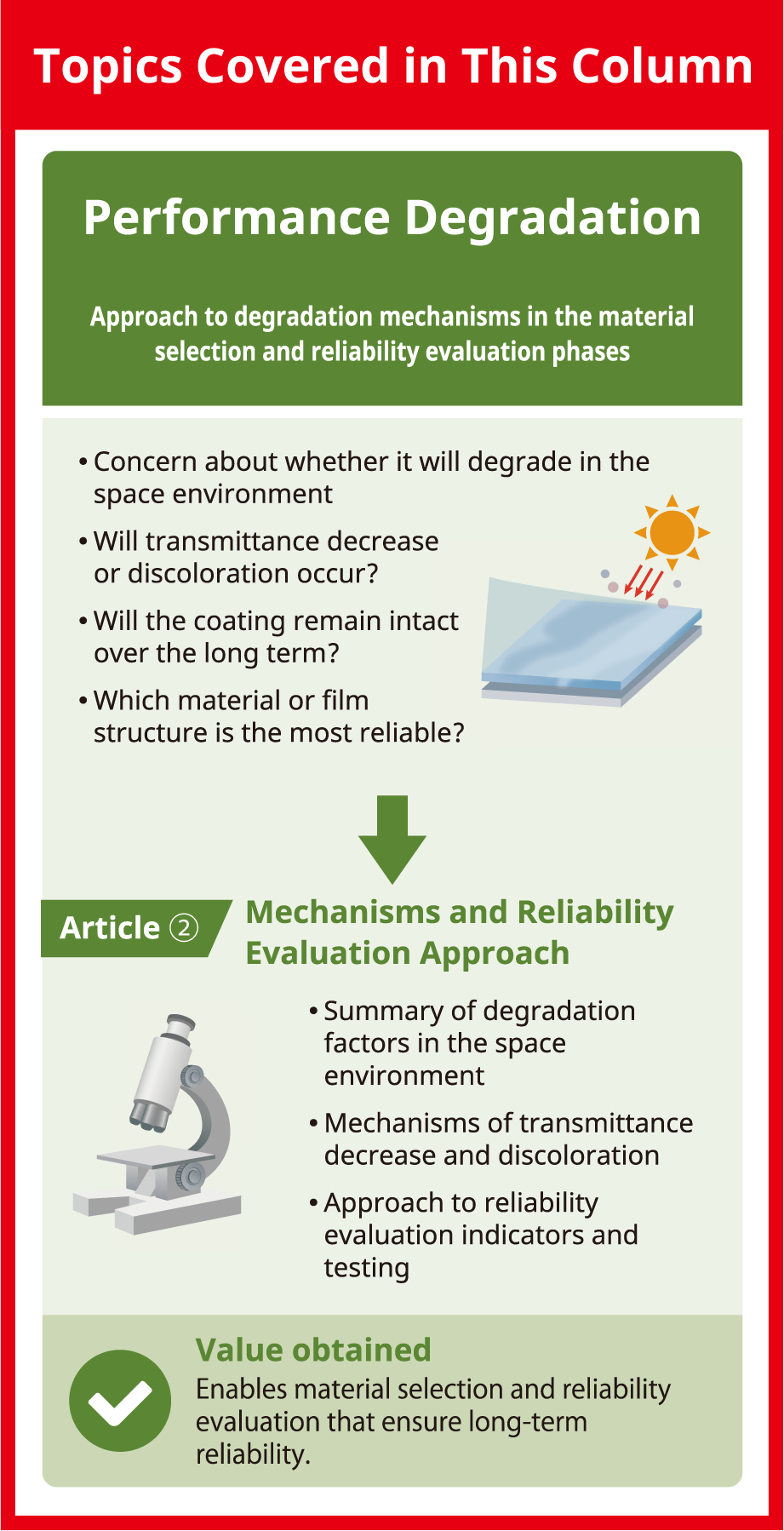
In satellite solar panels, material selection and the design of cover glass have a significant impact on power generation performance and mission lifetime. In the space environment, complex degradation factors that are not present on Earth include material degradation caused by electron and proton radiation (hereafter referred to as charged particles) and ultraviolet (UV) radiation, stress from thermal cycling in orbit, and delamination of coating films.
However, in actual design practice, engineers often face challenges such as:
・To what extent does a decrease in transmittance affect power generation performance?
・Under what test conditions should evaluation be conducted?
・How should the causes of cracks and delamination be analyzed?
This article focuses on cover glass for satellite solar cells and explains degradation mechanisms in the space environment and approaches to reliability evaluation. It organizes mechanisms of transmittance degradation due to charged particles and UV radiation, factors that cause cracks due to thermal cycling, and risks of coating film delamination, while also introducing evaluation metrics and approaches to root cause analysis.
Explore EG-S1: Ultra-Thin Cover Glass Designed for Space Applications

EG-S1 is designed to balance high optical transmittance, mechanical strength, and environmental resistance required for space use.
View EG-S1 Details →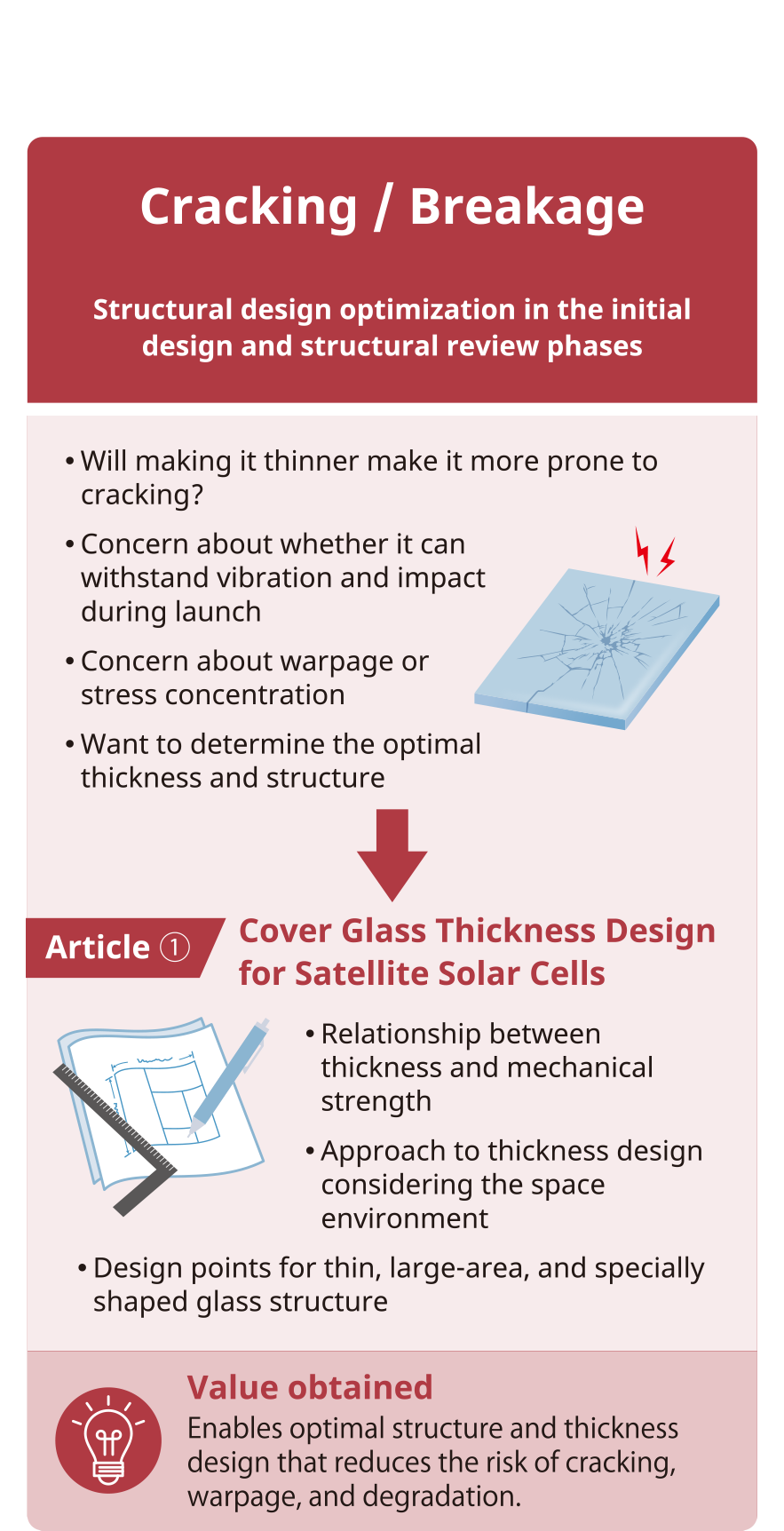
- Key Performance Requirements for Space Cover Glass
- Impact of Cover Glass Design on Mission Performance
- Material Degradation by Charged Particles and Ultraviolet Radiation
- Stress and Cracks Due to Thermal Cycling
- Degradation and Delamination of Coatings
- Defect Formation by Charged Particles
- Formation of Color Centers by Ultraviolet Radiation
- Impact of Degradation on Solar Cell Performance
- Material Design for Degradation Suppression
- Evaluation of Charged Particle-Induced Degradation
- Evaluation of Ultraviolet Degradation
- Evaluation of Mechanical Reliability
- Representative Tests for Space Applications

01/Role of Cover Glass in Satellite Solar Cells
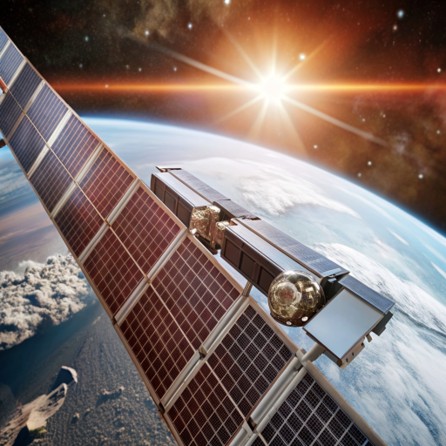
In satellite solar panels, cover glass protects the surface of solar cells. It is not merely a protective material; it plays an important role as an optical component that directly affects power generation performance and mission lifetime.
In space, conditions differ significantly from those on Earth. High-energy charged particles, intense UV radiation, vacuum, and large temperature fluctuations affect materials over long periods. Under such conditions, the cover glass must both protect solar cells and efficiently transmit sunlight.
Additionally, cover glass functions as a shielding material that suppresses radiation-induced degradation of solar cells. Space radiation is one factor that causes performance degradation in solar cells, but the thickness and material properties of the cover glass can mitigate its impact. Therefore, in satellite design, material selection considers both optical performance and radiation shielding performance.
Key Performance Requirements for Space Cover Glass
The cover glass used in satellite solar cells must meet the following key performance characteristics:
Optical Performance
The most important factor is optical transmittance. Since solar cells convert sunlight into electricity, the amount of light reaching the cells directly affects power generation performance. Therefore, it is essential to maintain high transmittance across the visible to near-infrared wavelength range. In particular, for multi-junction solar cells, each junction layer utilizes a different wavelength range, making it necessary to ensure high transmittance over a broad spectrum.
Radiation Resistance
Another important requirement is radiation resistance. In the space environment, materials are exposed to charged particles over long periods, which can generate defects within the glass. These defects act as centers that absorb light, leading to reduced transmittance and color changes.
Mechanical Reliability
Satellites are subject to strict weight constraints; therefore, cover glass tends to be made thinner. However, reducing thickness may decrease mechanical strength, so it is necessary for the design to balance weight and strength. In addition, satellites experience repeated temperature fluctuations in orbit, making resistance to thermal cycling an important performance requirement.
Impact of Cover Glass Design on Mission Performance
Cover glass specifications directly affect the power output of solar panels and mission lifetime.
For example, even a few percent decrease in transmittance can reduce the overall output of the solar panel. In long-term missions, transmittance degradation due to material deterioration progresses gradually, making it important to predict degradation during the design stage.
The thickness of cover glass involves a trade-off between radiation shielding and weight. Thicker glass provides better radiation shielding and suppresses solar cell degradation but increases mass and may reduce transmittance. Conversely, thinner glass reduces weight but requires careful consideration of mechanical strength and crack risk.
Therefore, satellite developers determine cover glass specifications by considering radiation levels in orbit, mission duration, and solar cell characteristics.
02/Degradation Factors of Cover Glass in Space
Material Degradation by Charged Particles and Ultraviolet Radiation
 The primary cause of degradation is material deterioration due to charged particles and UV radiation.
High-energy charged particle irradiation creates defects such as vacancies in the glass, which act as color centers and cause coloration. This results in reduced transmittance and color changes. The specific coloration depends on glass composition, such as yellowing or a bluish tint.
UV radiation can generate electron-hole pairs and change valence states, forming color centers and causing similar coloration. These phenomena are generally referred to as radiation-induced absorption.
Adding certain elements can suppress or compensate for degradation. Representative additives include cerium (Ce), iron, manganese, and titanium. Increasing the concentration of glass network-forming elements also improves radiation resistance.
These characteristics are important evaluation targets for optical materials used in space.
Stress and Cracks Due to Thermal Cycling
Satellites experience repeated day-night cycles in orbit, leading to large temperature fluctuations. This causes repeated thermal expansion and contraction in solar panels.
Because glass, adhesive layers, and solar cells have different coefficients of thermal expansion, thermal stress occurs at interfaces. Repeated stress can generate microcracks in the cover glass.
Degradation and Delamination of Coatings
Anti-reflective coatings are commonly applied to reduce reflection loss. Transparent conductive films may also be used for charge control.
However, in space, radiation and temperature changes can alter film stress, causing delamination at the interface between the coating and glass. This may change optical properties and affect power generation performance.

Explore EG-S1: Ultra-Thin Cover Glass Designed for Space Applications
EG-S1 is designed to balance high optical transmittance, mechanical strength, and environmental resistance required for space use.
View EG-S1 Details →03/Degradation Mechanisms of Transmittance Reduction and Color Change
Defect Formation by Charged Particles
In the space environment, materials are continuously exposed to high-energy charged particles, leading to the formation of radiation-induced defects within the glass. When charged particles impart energy to atomic bonds in the glass, the electronic configuration changes, resulting in the formation of electron traps and vacancies within the structure. These defects act as color centers and cause a reduction in transmittance in the visible wavelength region.
A color center is an electron capture site formed within the glass and has the property of absorbing light at specific wavelengths. As the number of color centers increases, the transmission spectrum of the glass changes, and the material may discolor, such as turning yellow or brown. This phenomenon is particularly important in long-term missions, as reduced transmittance may decrease the amount of light incident on the solar cells.
Since defect formation due to charged particle irradiation progresses cumulatively, predicting the extent of defect generation over the mission duration is an important consideration in cover glass design.
Formation of Color Centers by Ultraviolet Radiation
In space, materials are exposed to stronger UV radiation than on Earth. UV radiation excites chemical bonds in the glass and alters the electronic state, which can lead to the formation of color centers. This phenomenon is referred to as UV-induced defects and causes gradual changes in the optical properties of the material under prolonged exposure.
UV irradiation also affects the material surface. In particular, at the glass surface, UV radiation can cause bond breaking and recombination, leading to changes in surface conditions. These changes may increase light scattering and alter absorption characteristics, resulting in reduced transmittance.
Degradation due to UV radiation often occurs simultaneously with charged particle degradation; therefore, material evaluation in the space environment must consider these combined degradation effects.
Impact of Degradation on Solar Cell Performance
A reduction in the transmittance of cover glass directly affects the power generation performance of solar cells. In particular, multi-junction cells are widely used in space applications. Since each junction layer utilizes a different wavelength range, the wavelength dependence of transmittance is important.
For example, a decrease in transmittance in the short-wavelength region may reduce the power generation of the upper junction layer, while a decrease in the long-wavelength region may affect the lower junction layer. In this way, when transmittance reduction occurs in specific wavelength ranges, the current balance of the entire cell changes, which may result in reduced panel output.
In addition, literature reports that discoloration caused by radiation exposure may partially recover due to the temperature history (thermal cycling) experienced during satellite operation. However, the degree of recovery depends on the glass composition and irradiation conditions, and it is not necessarily fully reversible.
Therefore, when evaluating cover glass, it is important not only to assess overall transmittance reduction but also wavelength-dependent transmittance changes and analyze their impact on solar cell performance, including recovery behavior.
Material Design for Degradation Suppression
To suppress transmittance reduction in the space environment, materials must be designed in a way that inhibits defect formation.
One representative method is the use of Ce-doped glass. Ce ions have the property of absorbing UV radiation and suppressing defect formation within the glass. Therefore, Ce-doped glass is widely used in cover glass for space applications.
High-purity silica glass is also considered a material with excellent radiation resistance. The fewer impurities present in the glass, the fewer initiation sites for defect formation, which helps suppress changes in optical properties caused by radiation exposure. In addition, strict control of impurities during the manufacturing process is important. A high concentration of metal ions or impurity elements can act as initiation sites for defect formation, accelerating radiation-induced degradation.
Based on this background, EG-S1 has the characteristic of preventing radiation-induced degradation itself. Although discoloration caused by radiation exposure may recover depending on temperature history, reports indicate that this process can lead to a reduction in glass strength, meaning that recovery of optical properties alone is not sufficient. Therefore, EG-S1 adopts a design concept that minimizes the occurrence of degradation by suppressing defect formation.
Furthermore, regarding UV shielding properties, it is important to minimize shielding while considering the wavelength range that contributes to solar cell power generation.
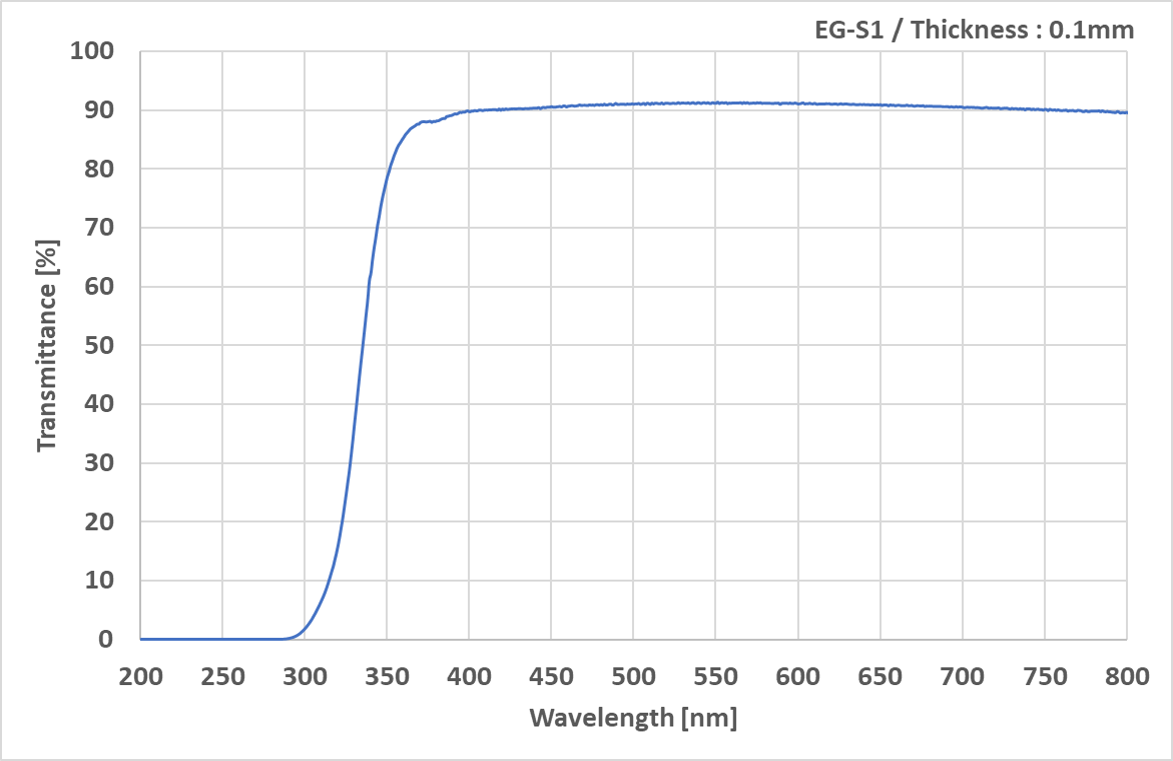 EG-S1 is designed to block UV radiation down to approximately 330 nm, which is required for GaAs-based cells, aiming to effectively cut short-wavelength light that contributes to degradation while minimizing the loss of useful wavelengths for power generation.
In optical materials for space applications, achieving both material design and functional performance in this way is an important factor in ensuring long-term reliability.
04/Reliability Evaluation Metrics for Solar Cell Cover Glass
Evaluation of Charged Particle-Induced Degradation
When evaluating material degradation caused by charged particle irradiation, multiple indicators centered on changes in optical properties are used. The most fundamental indicator is the change in transmittance, and the degree of degradation is quantified by comparing transmittance spectra before and after irradiation. This change in transmittance is generally expressed as ΔT and is an important evaluation metric for materials used in space applications.
In addition, measuring changes in the absorption coefficient makes it possible to evaluate the amount of color centers formed within the glass. The absorption coefficient indicates the material’s light absorption characteristics and is used to estimate the amount of radiation-induced defects generated. Furthermore, color difference is sometimes used to evaluate color change and is widely applied as a method to quantify the degree of material discoloration.
In AGC Inc’s (AGC) evaluation, in addition to these basic indicators, particular emphasis is placed on transmittance and reflectance in the wavelength range of 190–1500 nm as key optical properties.
Furthermore, for the evaluation of coloration due to charged particle irradiation, tests are conducted with irradiation levels that provide sufficient margin while assuming low Earth orbit applications. In these tests, strict conditions, including temperature control, are applied to prevent underestimation of degradation due to annealing effects caused by temperature rise during irradiation.
Evaluation of Ultraviolet Degradation
In evaluating UV degradation, the primary evaluation items are changes in transmittance and absorption spectra after UV irradiation. In particular, UV transmittance is an important indicator for understanding material degradation caused by UV exposure.
In UV irradiation tests, long-duration UV exposure is performed under conditions simulating the space environment, and optical properties before and after irradiation are compared. In addition, measuring absorption spectra makes it possible to analyze the wavelength regions in which absorption has increased.
At AGC, when necessary, coloration evaluation due to UV radiation is also conducted in collaboration with specialized evaluation institutions.
Evaluation of Mechanical Reliability
In addition, evaluating mechanical strength is important to ensure the reliability of cover glass. Since glass is a brittle material, the presence of micro-defects significantly affects its strength. Therefore, it is necessary to evaluate properties such as bending strength and impact resistance from multiple perspectives.
At AGC, for the evaluation of surface and edge strength, standard bending tests, as well as proprietary testing methods that represent fracture modes unique to glass, are utilized. These evaluations confirm resistance to mechanical loads during launch and operation.
Furthermore, it is possible to investigate fracture modes by analyzing fracture surfaces of samples after testing, and to propose improvements using strength simulations as countermeasures.
Representative Tests for Space Applications
In material evaluation for space applications, tests that simulate the actual space environment are conducted. A representative test is charged particle irradiation testing, which evaluates material degradation caused by space radiation.
In UV irradiation testing, UV spectra close to those in the space environment are reproduced to evaluate changes in optical properties under long-term exposure. Thermal vacuum testing combines vacuum conditions and temperature variations to assess material behavior. In addition, thermal cycling tests simulate the day-night temperature changes experienced by satellites in orbit to evaluate mechanical reliability and interfacial durability.
While these tests enable evaluation under conditions close to the actual environment, many of them, such as durability testing, require long periods. Therefore, from a development timeline perspective, short-term evaluation may be required. In such cases, accelerated testing methods are used to reproduce degradation phenomena in a shorter time.
However, in accelerated testing, depending on the test conditions, degradation mechanisms different from those in the actual environment may be induced. Therefore, it is important to strictly control test conditions such as irradiation intensity, temperature, and atmosphere, and to obtain valid evaluation results while ensuring consistency with the real environment.
By comprehensively analyzing the results of these tests, it becomes possible to predict material lifetime and reliability in the space environment.
05/Frequently Asked Questions: Evaluation and Design of Satellite Solar Cell Cover Glass
Q. How are degradation effects caused by charged particles and ultraviolet radiation in the space environment evaluated?
In the evaluation of cover glass for space applications, degradation is assessed by combining multiple optical indicators and material analyses. First, transmittance spectra before and after irradiation are measured to confirm changes in transmittance within the wavelength range utilized by solar cells.
In addition, changes in absorption spectra and color difference evaluations are performed to quantitatively assess the degree of discoloration in the glass. For research purposes, analytical techniques such as electron spin resonance may also be used to measure the density of radiation-induced defects.
Q. Why do transmittance reduction and color change occur in space cover glass?
The primary cause of transmittance reduction and color change is radiation-induced defects generated within the glass. When charged particles or UV radiation irradiate the glass, they alter chemical bonds within the material, forming centers that absorb visible light.
To suppress this, material designs with UV absorption properties and high-purity glass are sometimes used in space applications.
Q. How is root cause analysis conducted if cracks or delamination occur in cover glass during satellite operation?
In root cause analysis, the first step is to identify the fracture mode. Fracture surface observation and cross-sectional analysis are conducted to determine the location and propagation direction of cracks. Next, thermal stress analysis is performed to evaluate stress distribution caused by differences in thermal expansion between materials.
In the case of delamination issues, interfacial adhesion and film stress are evaluated to investigate the influence of materials and manufacturing processes.
Q. Are there promising cover glass materials for next-generation missions?
In current satellite solar cells, materials with radiation resistance and UV shielding properties are widely used. These materials are designed to suppress transmittance degradation in the space environment.
In the future, the development of cover glass materials that achieve both lightweight design and high durability, as well as high-performance anti-reflective coatings, is expected to continue advancing.
06/EG-S1 as a Cover Glass Option for Satellite Solar Cell Applications
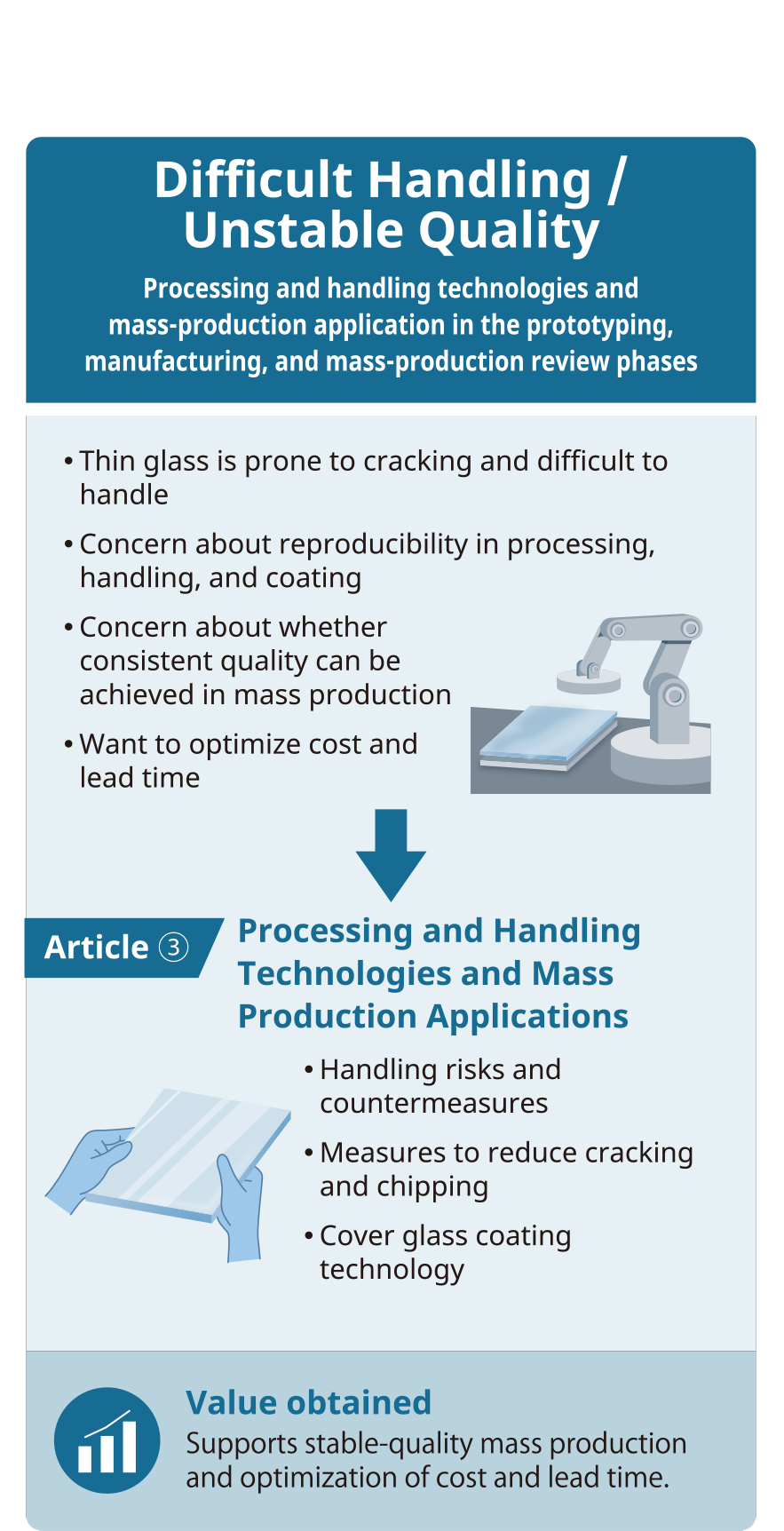
As described in this article, cover glass for satellite solar cells must simultaneously meet multiple design requirements, including maintaining optical transmittance, environmental resistance to space radiation and UV exposure, mechanical reliability under thermal cycling conditions, and thickness reduction to achieve weight savings.
The satellite solar cell cover glass EG-S1, provided by AGC, is designed based on these requirements in spacecraft design and offers features that make it a viable material option during the design and evaluation stage. Its main features are as follows:
• Available in ultra-thin thicknesses starting from 0.05 mm
• Supports a wide range of thicknesses from thin to thick glass
• Compatible with large-area designs and complex shapes
• Material properties optimized for the space environment
• Surface treatment options such as anti-reflective coating and indium tin oxide coating
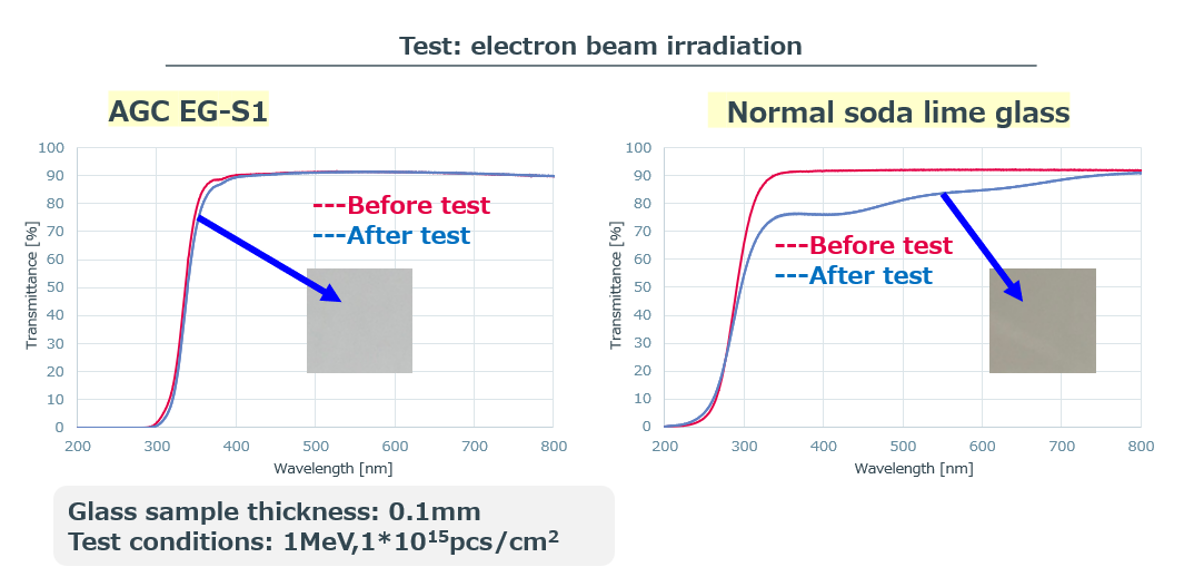
Furthermore, EG-S1 adopts a special edge treatment that suppresses the occurrence of microcracks and ensures high edge strength. This improves the handling performance of the glass and helps reduce the risk of damage during assembly processes. Improved edge strength also contributes to ensuring reliability when using thinner glass.
In this way, EG-S1 is not merely a thin glass material but a cover glass designed for space applications with comprehensive consideration of edge quality, mechanical strength, and environmental resistance. It can be considered a material option that accommodates a wide range of design requirements for satellite solar panels, from lightweight thin-glass designs to thick-glass configurations emphasizing durability.
07/Conclusion | Key Takeaways and Future Directions in Cover Glass Design
Satellite solar cell cover glass is a critical optical component that directly influences power generation performance and mission lifetime. In the space environment, complex degradation factors not present on Earth include material degradation caused by charged particles and UV radiation, stress induced by thermal cycling, and delamination of coating films.
Therefore, it is important to understand the mechanisms of transmittance degradation and to reflect the results of evaluations such as charged particle irradiation tests and UV tests in the design specifications. In addition, long-term reliability can be ensured by optimizing the combination of substrate materials and coatings.
For future space missions, the development of cover glass materials that simultaneously achieve lightweight design, radiation resistance, and high optical performance, as well as the establishment of appropriate evaluation methods, is expected to become increasingly important.